
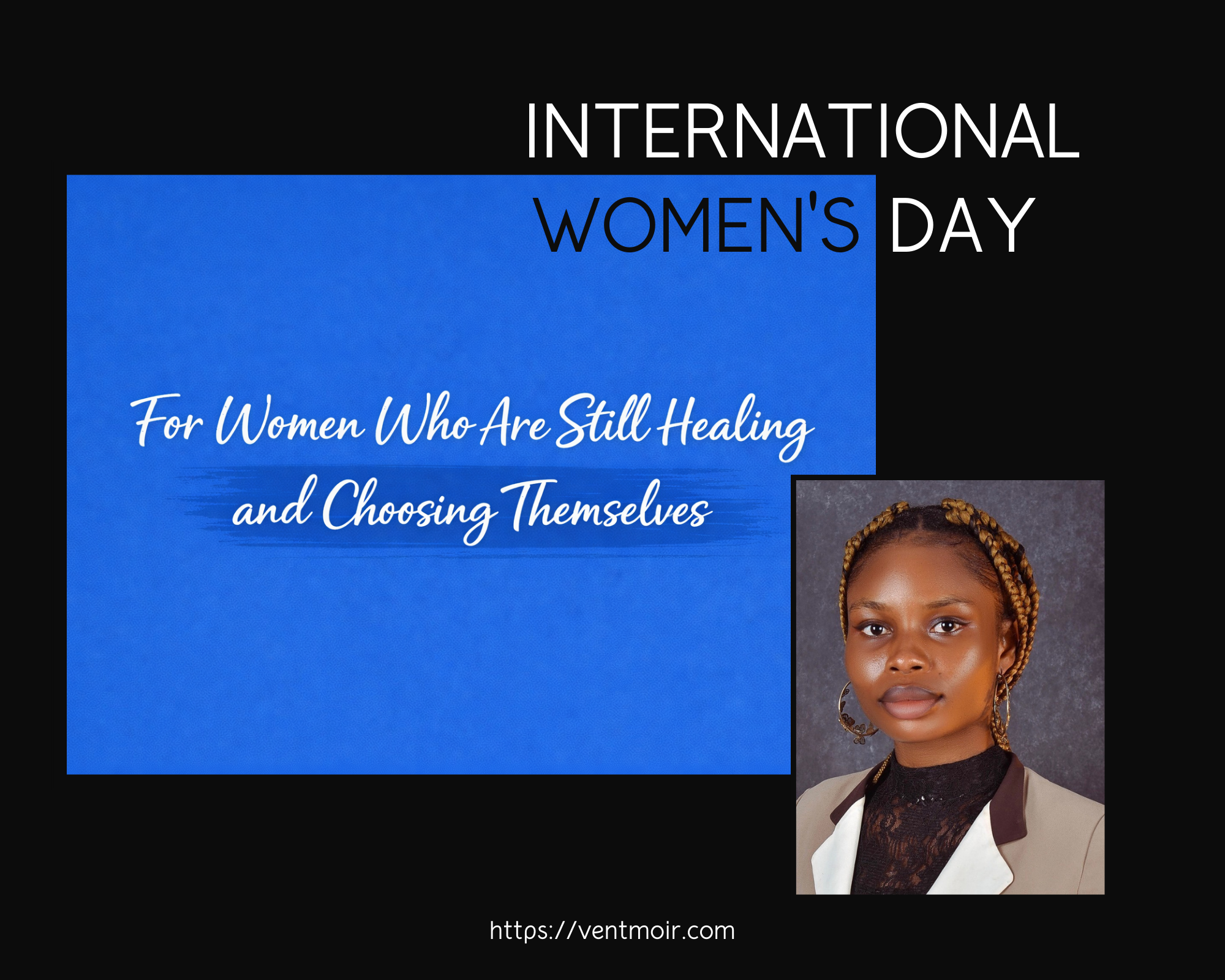
For Women Who Are Still Healing and Choosing Themselves With Psychologist, Oluwajuwonlo Adeoye
Timothy Aremu
Author
To begin, could you introduce yourself and share the story behind what inspired you to pursue a career in psychology?
My name is Adeoye Janet Oluwajuwonlo, and I'm a clinical psychologist and developmental therapist. I work with individuals across all lifespan, and a significant part of my work involves supporting children and families on the autism spectrum.
My journey into psychology wasn't exactly a straight line. Like many young people growing up, there were certain expectations about what a "good" career should look like. My father hoped I would study medicine or pharmacy, and for a while, that seemed like the direction things might go.
But life has a way of redirecting us in interesting ways. During my A levels, I had 13 points, which meant medicine was no longer an option, and by the time I considered switching to pharmacy, it was already late in the admission cycle. The University of Ibadan offered me Psychology instead.
At the time, I accepted it almost out of curiosity. I've always been someone who wanted to understand people, why we think the way we do, why we behave the way we do, and how our experiences shape us. Psychology opened that door in a way I hadn't fully anticipated. It felt less like studying a subject and more like learning about life itself.
Interestingly, I was later offered Biochemistry at Obafemi Awolowo University. But by then, I had already fallen in love with psychology. After graduation, like many people trying to find their footing, I explored different paths, including running a few businesses from crafts to food. Those experiences were valuable, but something always felt slightly out of alignment. Eventually, I realized that the work that gave me a sense of purpose was psychology.
So in many ways, I returned to what I like to call my second or third love, but the only love that felt real. Looking back now, it feels like a journey that helped me understand exactly why this field matters so much to me, a language for the human experience as they undergo growth, challenge, and healing.
In your experience as a psychologist, what are some mental health struggles that women commonly carry but rarely talk about openly?
In my experience as a psychologist, many women carry psychological burdens that are often invisible to the people around them. From a young age, many women are conditioned to be strong, dependable, and emotionally supportive to others, while their own struggles can remain quietly hidden for years.
One concern I frequently encounter is Body Dysmorphic Disorder (BDD). Many women grow up under intense societal pressure around appearance, and over time, this can distort how they perceive their own bodies. They may develop an intense and time-consuming preoccupation with perceived physical flaws, sometimes even when those flaws are minor or nonexistent.
Even women who are highly accomplished and confident in other areas of life may carry a persistent inner critic that tells them they are not enough, which can eventually cause physical and emotional distress to them.
Another very common struggle is burnout. Society, and even the media, often praises the image of the "strong woman" who successfully juggles multiple roles, professional responsibilities, caregiving, family expectations, and emotional labour within relationships.
Over time, this constant giving can lead to physical and mental exhaustion. What is particularly concerning is that many women normalize this state. They begin to believe that feeling depleted is simply the cost of being responsible for everyone else, and it is how it should be.
Of course, it would be impossible to talk about women's mental health without mentioning depression. Many unaddressed psychological struggles can eventually contribute to depressive symptoms, including prolonged burnout. One common pattern is "high-functioning" depression.
These are women who appear to have everything together. They show up for work, care for their families, maintain relationships, and meet expectations. Yet internally, they may be carrying persistent sadness, emotional numbness, or a quiet sense of emptiness while continuing to function.
These struggles are very important to discuss because they are mostly hidden behind competence. However, part of the work we do in therapy is helping them recognize that they do not have to carry everything alone. Their emotional experiences are valid and deserving of care, attention, and healing. Since ultimately, life is not only meant to be endured, it is also meant to be lived and enjoyed.
Why do you think so many women struggle to prioritize their own mental health?
I may have explained parts of this indirectly in the previous questions, but to summarize, many women struggle to prioritize their mental health because they have been socially and psychologically conditioned to place themselves last while putting others, especially family, first.
From a young age, many girls grow up hearing, either subtly or directly, that being a "good" daughter, partner, mother, or friend means being available, accommodating, caring, and emotionally supportive to others. Over time, this creates a pattern where caring for others becomes automatic, while caring for themselves begins to feel optional or even selfish.
In many cultures, you might hear statements like a parent asking their daughter, "Is this what you will be doing in your husband's house?" when she prioritizes herself or pushes back on expectations. Comments like these may seem small in the moment, but they quietly reinforce the idea that a woman's value lies in how well she serves others. That, of course, is a conversation for another day.
Another major factor is role overload. Many women carry multiple responsibilities at once, professional duties, caregiving roles, household planning and management, relationship maintenance, and the emotional labour of holding families and communities together. When life is structured around constant responsibility, it can become difficult to even pause long enough to check in with oneself, let alone actively prioritize mental health. There is always something or someone else that feels more urgent.
This is why an important part of mental health work with women involves helping them relearn that their well-being matters too. Caring for oneself is not selfish, and it is a necessary foundation for living a balanced and emotionally healthy life.
Many women reach a point where they feel they've lost parts of themselves. What are some ways women can begin reconnecting with who they truly are?
The first step is to create space for self-reflection. PAUSE!!! Pause the responsibilities and ask, What do I enjoy? What matters to me? What feels meaningful to my life beyond my responsibilities?
Take the time to reflect, whether through journaling, quiet moments alone, or therapy, so that you can begin to uncover parts of yourself that have been buried under routine and expectations.
The next step is to reconnect with interests and passions that may have been set aside or abandoned because there is "no time." Sometimes these are small things that once brought joy, like creative hobbies, learning something new, spending time in nature, or engaging in activities that are not tied to productivity or obligation. These experiences will help you rediscover aspects of your identity that exist beyond the roles you play for others.
Third, start setting healthy boundaries. Every request for help should not be "yes." Many women have been accustomed to saying yes to everything and everyone. To reconnect themselves would require learning that it is acceptable to say no, to protect personal time, and to create limits that support emotional well-being.
Finally, I often encourage women to practice self-compassion during this process. Rediscovering oneself can bring up feelings of grief for lost time or missed opportunities. While healing is not about judging the past, it is about recognizing that growth and rediscovery are always possible.
Healing is often described as non-linear. From a psychological perspective, what does real healing actually look like?
From a psychological perspective, real healing rarely looks the way people expect it to. Most people imagine healing as a clear, upward journey, where once you begin doing the work, everything steadily improves. While in reality, healing is messy, layered, and deeply personal to an individual. So no two individuals have the same healing path.
One of the first signs of real healing is increased awareness. People begin to recognize their emotional patterns, triggers, and coping mechanisms. They start noticing why certain situations affect them the way they do. This awareness can sometimes feel uncomfortable at first, but it is actually an important step because you cannot change what you do not understand.
Another aspect of healing is learning to respond differently to familiar challenges. The situation itself may not always change immediately, but the way a person interprets and responds to it gradually shifts. Someone who once reacted with intense self-criticism, for example, may begin to approach themselves with more curiosity and compassion.
Healing also involves setbacks and revisiting old emotions. It is common for people to feel like they are moving backward when difficult memories or feelings resurface. While in many cases, this simply means the mind is processing experiences at a deeper level than before. Progress in therapy often looks like revisiting the same themes but with greater insight, emotional regulation, and resilience each time.
Over time, real healing begins to show in quieter ways. People start developing healthier boundaries, more balanced relationships, and a stronger sense of self. They become less driven by fear, shame, or unresolved pain, and more guided by clarity and self-understanding.
So when we say healing is non-linear, what we really mean is that it is a process of growth rather than perfection. It includes progress, pauses, reflection, and sometimes discomfort or relapse. However, through that process, people gradually move toward a life where they feel more grounded, more self-aware, and more able to engage with the world in a healthier and more authentic way.
What are small but meaningful steps women can take when they are just beginning their healing journey?
When women are just beginning their healing journey, it's important to understand that healing starts with small, intentional shifts that gradually create space for emotional restoration and self-understanding.
One meaningful step is learning to pause and check in with oneself. Many women have spent years focusing on the needs of others, often without asking themselves simple questions like, How am I really feeling today? What do I need right now? So, develop the habit of briefly checking in with your emotional state so that you can begin to rebuild self-awareness.
Another important step is giving yourself permission to rest. Especially in a culture that celebrates constant productivity and self-sacrifice, rest can feel uncomfortable or even undeserved. Yet emotional and psychological recovery requires moments where the mind and body are allowed to slow down and recover. I often call it "being human".
Start journaling, talking with a trusted friend, joining a supportive community, or seeking professional help in form of therapy. When you can put words to your experiences, you start having clarity to emotions that you have carried silently for years.
Setting small boundaries cannot be overemphasized. This does not have to start with major life changes. Sometimes it looks like declining an additional responsibility when you are already overwhelmed, or carving out a small amount of personal time during the week.
These small acts gradually reinforce the idea that personal well-being matters.
Finally, seek professional help. Therapy is not advice or small talk. It is a structured, collaborative treatment that can help you relieve any distress you have through confidential, non-judgmental spaces. Let professionals walk with you.
Remember to practice self-compassion as you begin this journey. Healing can sometimes bring up feelings of regret, guilt, or frustration about the past, but with small acts of self-respect repeated consistently over time, the foundation for a deeper and lasting healing process will be built.
How can women learn to show themselves compassion instead of constant self-criticism?
Learning to replace constant self-criticism with self-compassion is not about ignoring mistakes; it is about relating to oneself with the same understanding and kindness that one would offer to others.
One of the first steps is becoming aware of the inner dialogue. Many people are surprised when they begin to notice how harshly they speak to themselves in their own thoughts. Statements like "I should have done better" or "I'm not good enough" can sometimes run automatically in the background. It's important, as a starting point, to start recognizing that this voice exists.
Then, start to challenge the inner critic with curiosity rather than judgment. Instead of immediately accepting negative self-talk as truth, women can begin asking questions such as: "Would I speak this way to someone I care about?" or "Is there another way to interpret this situation?" This shift helps soften the rigid standards many women hold for themselves.
Practice self-compassion during difficult moments too. When something goes wrong, the natural reaction for many people is self-blame. However, it's important to learn to respond to your own struggles with patience and understanding rather than punishment or harsh words.
Acknowledge one's effort instead of focusing only on outcomes. Many women measure their worth by how well they perform or how much they accomplish. Start shifting attention toward effort, growth, and learning. This allows space for imperfection without turning every mistake into a personal failure.
The key take-away here should be compassion. Talk to yourself like you would have spoken to an older friend.
How can communities better support women who are carrying heavy emotional responsibilities?
I believe support is most effective when it addresses both practical and emotional needs.
First, communities can provide spaces for connection and shared experience. Support groups, whether in person or online, can allow women to share challenges, exchange coping strategies, and feel seen without judgment. Simply knowing that others understand their struggles can reduce feelings of isolation and reinforce that they are not alone.
Second, practical support matters. Financial assistance, free or discounted services provided by government programs, such as the autism support bill proposed by Senator Natasha, can make a real difference.
Communities can help with childcare, household tasks, or community programs that relieve some of the daily pressures that contribute to burnout. When responsibilities are shared, women have the mental and emotional bandwidth to care for themselves as well as others.
Finally, communities can help normalize seeking help and self-care. Celebrating the importance of emotional well-being, encouraging therapy or counseling, and removing stigma around asking for support are all important. This creates a culture where prioritizing one's mental health is seen as responsible rather than selfish.
If every woman listening to this interview could hear one message from you about their worth and mental health, what would it be?
Your worth is not measured by how much you give to others, how perfect you appear, or how many roles you manage. It is inherent, simply because you are you and you are a HUMAN being.
Your mental health matters just as much as anyone else's. Caring for yourself is not selfish; it is a necessity. Hence, when you honor your own needs, set boundaries, and nurture your well-being, you are not only preserving your health, you are also creating a stronger foundation to show up authentically for others.
You're also an artist and writer. How can creativity help people process emotions and heal?
Creativity allows people to express emotions and experiences that are difficult to put into words. Art, writing, music, and other forms of creative expression can also provide a safe space to explore feelings, process difficult experiences, and stand as a pathway to gain insight into oneself without fear of judgment.
When we create, we externalize inner experiences. Drawing, painting, or writing can help one to visualize and make sense of emotions, release tension, and uncover patterns in their thoughts or behaviours, an indirect act of journaling. These acts of expression are not just symbolic; they actively engage both the emotional and cognitive parts of the brain, helping to regulate mood, increase mindfulness, and increase self-awareness.
It's one of the reasons why I'm currently working towards launching "Mind-Craft," a therapy program where art therapy is combined with other evidence-based psychological approaches. This integration will help participants to not only express themselves creatively but also develop practical coping strategies and insight guided by proven therapeutic techniques.
In what ways can creative expression like writing, drawing, or crafting support mental well-being?
Just as I mentioned earlier, creative expression through writing, drawing, or crafting can support mental well-being by giving people a safe and tangible way to explore and process their emotions without judgment.
Creativity in therapy can be a tool for reflection, growth, and emotional transformation, helping people reconnect with themselves and move toward healing in a meaningful, personalized way.
As someone who advocates for children with special needs, what emotional challenges do mothers or caregivers often face that people may not understand?
One major challenge is chronic stress and anxiety. Caring for a child with special needs involves keeping to medical appointments, therapy sessions, school requirements, and behavioral challenges at home. The responsibility is ongoing, and many caregivers feel they must manage everything perfectly, which can create constant mental strain.
Another one is guilt. Mothers and caregivers frequently ask themselves: "Am I doing enough? Am I responding correctly? Could I have prevented this?" or "Didn't I pray enough?" These feelings can persist even when they are providing excellent care. People outside the caregiving experience may not realize how much this self-questioning weighs on them.
Isolation is also common. Caring for a child with special needs can limit your social interactions and make it difficult to maintain friendships or participate in activities, especially if one doesn't have the financial capability to get a helping hand like a nanny. Over time, this can create feelings of loneliness and emotional exhaustion. The need for every outing to be planned and considered can make a parent decide to stay at home instead, which will reinforce the isolation more. Outings like church, hangouts, and parties are then canceled.
Additionally, there's often ambivalence and grief that isn't openly discussed. Caregivers may love their children deeply but also mourn the life they imagined for themselves or their family.
Processing these complex emotions while remaining present for their child requires immense resilience and is not easy to process.
Many women are still learning how to set boundaries, rest, and choose themselves without guilt. What guidance would you give to women who are trying to create healthier emotional boundaries in their lives?
I think I have responded to this previously. However, it is important to reframe guilt as a sign of growth, not failure. Feeling guilty when asserting your needs is natural, especially if you've been socialized to always put others first. Remind yourself that taking care of yourself is necessary for your well-being and allows you to show up more fully in all areas of life.
When you continue to show up for yourself, guilt will stop eventually.
Looking ahead, what changes would you love to see in how society understands and supports women's mental health?
I would also love to see practical support systems widely available: accessible therapy and counseling services, financial and caregiving support, and community programs that reduce daily burdens. Policies, workplace cultures, and public initiatives should acknowledge the realities of emotional labor and create structures that empower women to care for themselves without guilt.
As we close this International Women's Day series, what message would you like to leave for women who are still finding their strength, voice, and healing?
I want to remind every woman still finding her strength, voice, and healing that you are not behind, broken, or failing; you are on your own path, and it is enough to simply keep showing up for yourself.
Strength is not the absence of struggle; it is the courage to acknowledge your challenges, to pause when needed, and to care for yourself with the same compassion you offer others, if not more.
For people who would like to learn more about your work or connect with you, where can they find you?
For anyone who would like to learn more about my work, connect, or ask questions, you can reach me through the following channels:
- LinkedIn: OluwajuwonleAdeoye
- Email: adeoyejuwonjanet@gmail.com
- Call/WhatsApp: +234 816 557 3297
Any final comments or thoughts you'd like to share?
Healing, growth, and self-understanding are journeys, not destinations. Remember to honor your path at all times, be gentle with yourself, and seek professional support whenever it's needed.
Related Posts
More articles you might find interesting.