
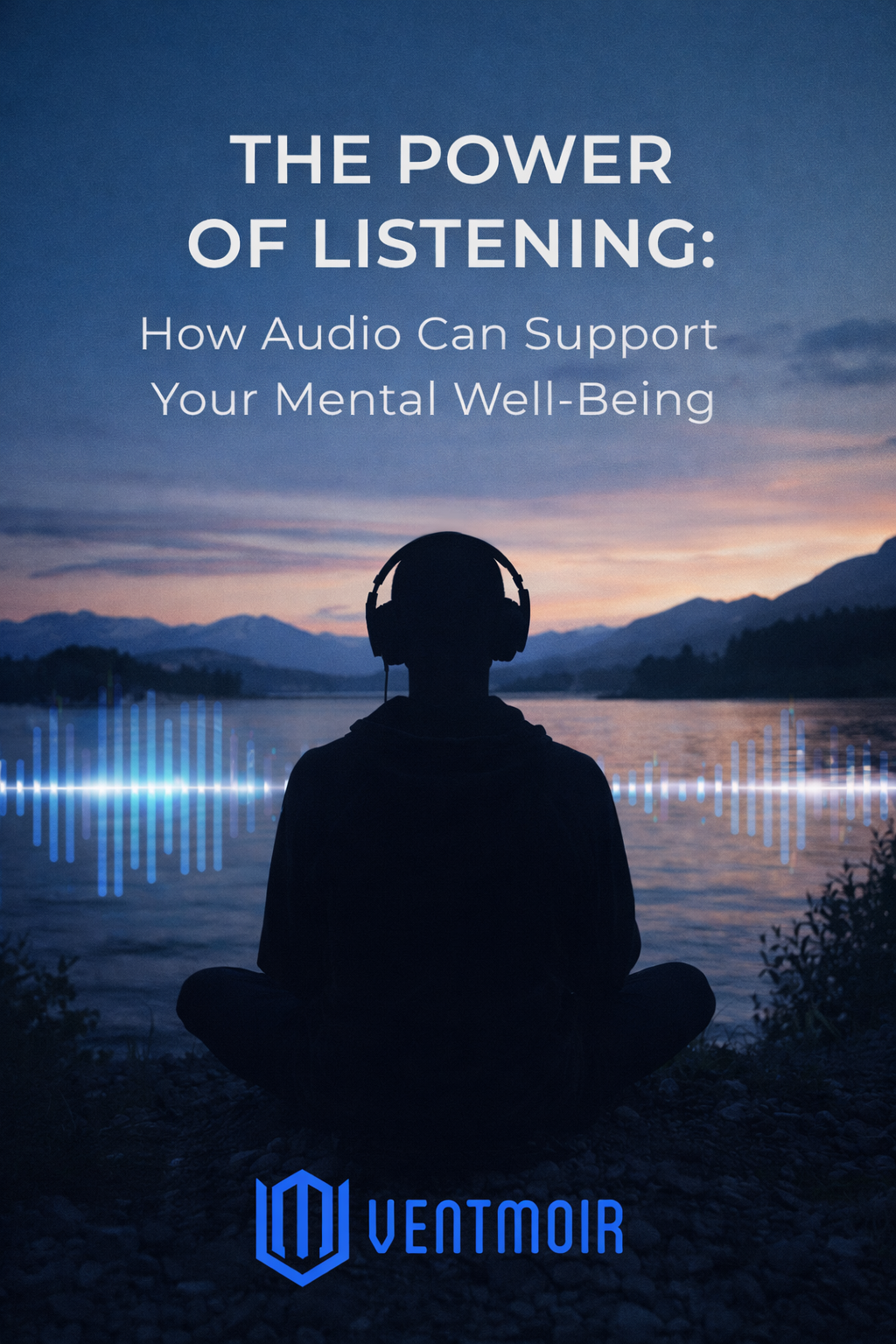
The Power of Listening: How Audio Can Support Your Mental Well-Being
Damilola Adebiyi
Author
In a world that rarely slows down, our minds are constantly processing noise; notifications, conversations, worries, and expectations. Over time, this mental overload can leave us feeling anxious, restless, unfocused, or emotionally drained. One surprisingly powerful way to support mental health can be simple as listening to calming audio.
Sound has a direct pathway to the brain. Unlike reading or watching, listening doesn’t demand constant visual attention. It allows the mind to soften, wander gently, and reset. This is why audio-based practices like guided breathing, meditation, soothing music, or ambient sounds have been used across cultures for centuries to calm the mind and restore balance.
How Listening Affects the Mind
When you listen to calming or intentional audio, your nervous system begins to respond. Slow, steady sounds can signal safety to the brain, reducing stress hormones and encouraging relaxation. Guided breathing audios help regulate your breath, which in turn lowers heart rate and eases physical tension. This connection between breath, sound, and the nervous system is one reason audio is so effective for managing anxiety and stress.
Listening also helps quiet mental noise. When your thoughts feel loud or overwhelming, focusing on a gentle voice or steady rhythm gives your mind something grounding to hold onto. This can reduce rumination, the repetitive thinking that often fuels anxiety and low mood.
Audio for Focus and Emotional Balance
Not all audio is about relaxation. Certain sounds are designed to improve focus and mental clarity. Soft background tones, nature sounds, or guided focus sessions can help reduce distractions and make it easier to stay present with tasks. For people who struggle with restlessness or scattered thoughts, listening can act as an anchor.
Audio can also support emotional processing. Guided meditations and gentle self-reflection exercises create space to notice emotions safely. Instead of pushing feelings away, listening allows you to sit with them safely, helping emotions feel less overwhelming and more manageable.
Better Sleep Through Sound
Sleep difficulties are common, especially when stress and anxiety are involved. Listening to calming audio before bed can help signal to your brain that it’s time to rest. Gentle breathing exercises, body relaxation guides, or ambient sleep sounds can ease the transition from a busy day into restful sleep. Over time, this can improve sleep quality and help establish healthier nighttime routines.
Why Audio Works When Words Feel Hard
On difficult days, talking or even journaling can feel like too much effort. Listening requires less energy. You can simply lie down, close your eyes, and let the sound do the work. This makes audio especially helpful during moments of emotional exhaustion, overwhelm, or burnout.
The Healing Room on Ventmoir
This understanding of sound and mental well-being is why Ventmoir created the Healing Room . It’s a space designed to help you pause and reconnect with yourself through carefully selected audio experiences. If you need help calming your thoughts, focusing your mind, breathing through anxiety, or sleeping better, the Healing Room offers gentle support without pressure.
Mental health care doesn’t always have to be complex. Sometimes, the most helpful thing you can do is pause, press play, and give yourself a few calm moments to simply breathe, listen, and be fully present.
Related Posts
More articles you might find interesting.