
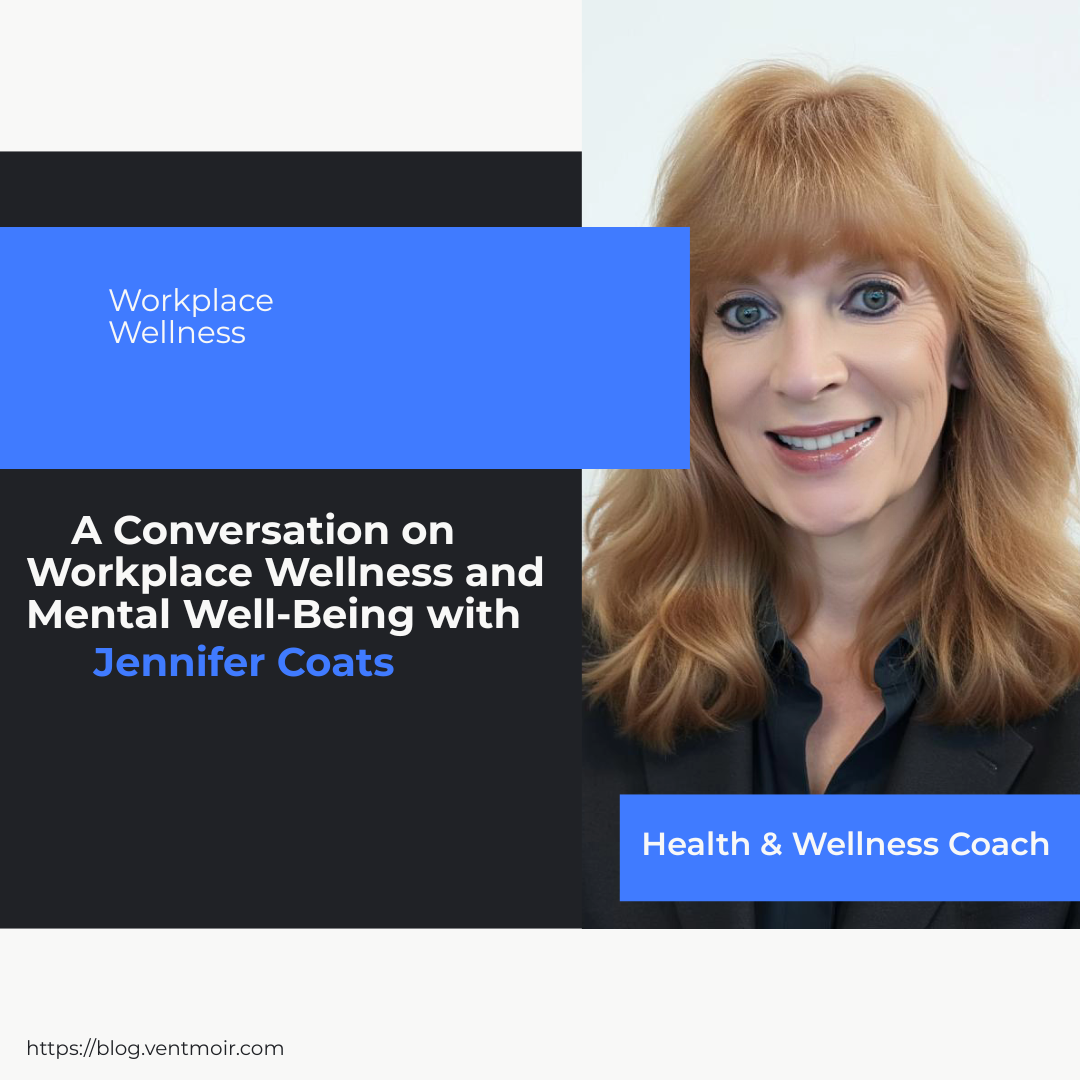
A Conversation on Workplace Wellness and Mental Well-Being with Jennifer Coats
Timothy Aremu
Author
Can you tell us a little about yourself and what inspired your journey into health, wellness, and employee wellbeing?
My journey into health, wellness, and employee wellbeing has been shaped by my personal experiences and my professional passion for helping others. Growing up as a figure skater, I learned early on the importance of discipline, consistency, physical fitness, and mental resilience. Skating taught me that wellness is about much more than performance. It is about building healthy habits, overcoming challenges, and continuously striving to improve. That mindset has stayed with me throughout my life. I am always looking for ways to improve my own health and wellbeing, whether through fitness, nutrition, education, or personal growth. My experiences have reinforced my belief that wellness is a lifelong journey, not a destination.
Professionally, I find great fulfillment in helping employees become healthier, better understand their benefits, and feel empowered to make informed decisions about their health and wellbeing. I also enjoy educating and supporting people as they work toward their personal health goals, because I know that when individuals feel their best, it positively impacts every aspect of their lives. Being able to encourage, educate, and help others succeed on their wellness journey inspires me every day.
With over 30 years of experience in the wellness industry, how has your understanding of wellbeing evolved over the years?
Over the past 30 years, corporate wellness has evolved from viewing employee health primarily as physical fitness to recognizing it as a whole person wellbeing concept. Early wellness initiatives focused on on-site fitness centers and encouraging physical activity. As the field matured, there was a greater emphasis on education, prevention, and helping employees make informed decisions about their health and benefits.
Today, organizations have access to more data and metrics than ever before which can provide valuable insights into program effectiveness and employee engagement. One of the most important lessons I have learned is that wellbeing is not one-size-fits-all. You cannot use a cookie cutter aproach. Every workforce is unique, with different demographics, needs, challenges, and goals. What works exceptionally well for one organization may not be the right solution for another.
The most successful wellbeing strategies balance data driven decision making with a genuine understanding of employees as individuals. By listening to employees and tailoring programs to their specific needs, organizations can create a culture of wellbeing that supports both personal health and business success.
Many people associate wellness primarily with physical health. How would you define true wellbeing today?
True wellbeing goes far beyond physical health and includes dimensions such as physical, emotional, social, financial, spiritual, and occupational wellbeing. When one area is out of balance, it can affect the other areas. This is why effective wellbeing programs should support the whole person, not just their physical health. By addressing multiple dimensions of wellbeing, organizations can help create healthier and more engaged workforces.
Mental health challenges are becoming increasingly common in workplaces around the world. What are some of the biggest issues you see employees facing today?
One of the biggest mental health challenges employees face today is stress and burnout. Employees are balancing demanding workloads, family responsibilities, financial pressures, and the constant connectivity that technology brings. The expectation to always be available can make it difficult to disconnect and recharge. I also see increasing levels of anxiety, burnout, and feelings of isolation. Employees struggle with maintaining social connections and feeling a sense of belonging, and hesitate to seek help because of lingering stigma around mental health concerns. Another challenge is the uncertainty many people experience, whether related to economic conditions, career growth, caregiving responsibilities, or personal health concerns. These stressors have a significant impact on both mental and physical wellbeing. The encouraging news is that employers are increasingly recognizing the importance of mental health and expanding resources and support. Again, there is no one-size-fits-all solution. Organizations are most successful when they create a culture where there is organizational transparency, and where employees feel supported, respected, and comfortable accessing mental health resources.
Why do you think so many people struggle to prioritize their mental and emotional wellbeing, even when they know it is important?
I feel that stigma remains one of the biggest reasons people struggle to prioritize their mental and emotional wellbeing. Although conversations around mental health have become more common, many individuals still worry that asking for help may be perceived as a sign of weakness. In addition, many people are focused on meeting the demands of work, family, and daily life, and tend to put their own wellbeing last. Creating a culture that normalizes conversations about mental health, encourages self-care, and provides accessible resources, helps to reduce stigma and empower people to seek support when they need it.
In your experience, what role does workplace culture play in an employee's mental health and overall wellbeing?
Workplace culture plays a major role in an employee’s mental health and overall wellbeing. In my experience, it can be one of the biggest determining factors in whether someone feels supported or burned out. When there is a lack of transparency, unclear communication, or a sense that employees are just a number, it can lead to stress, disengagement, and emotional exhaustion. On the other hand, workplaces that prioritize openness, respect, and recognition tend to foster a sense of belonging and psychological safety. That difference can directly affect motivation, resilience, and even physical health over time.
What are some signs that an employee may be experiencing burnout or emotional exhaustion?
Burnout or emotional exhaustion does not always show up in obvious ways at first. Sometimes it looks like someone acting quieter than usual, not engaging in conversations, or seeming checked out even when physically present. Other times it shows up as irritability, anger, and small things causing feelings of overwhelm.
How can organizations create environments where employees feel safe discussing mental health concerns without fear of judgment?
I believe it begins with leadership setting the tone. Employees will not feel safe talking about mental health if leaders only treat it as checking the box. There has to be real openness from the top with leaders being willing to talk about stress, boundaries, and mental health in a normal, human way. It also comes down to trust and consistency. If an employee speaks up and it is used against them later or they feel judged, that trust is broken.
I also believe that training managers to respond with empathy instead of dismissal is huge. Even simple things like offering flexibility, normalizing mental health days, and checking in without pressure can make a big difference. Ultimately, it’s about making mental health part of the regular workplace conversation, and not something people feel they have to hide.
Many people spend years putting work, family, and responsibilities ahead of themselves. What advice would you give someone who feels they have neglected their own wellbeing?
It can take a long time to realize how much of yourself you have been giving away to work, family, and responsibilities. I did not really start prioritizing my own health and wellbeing until my 50s, and a big part of that shift was recognizing that I could not truly show up for my family if I was constantly running on empty.
My advice to someone in that position would be to start small and stop thinking of self-care as something selfish. Even small changes like setting boundaries, getting proper rest, going for a walk, or saying no without guilt, can begin to rebuild that balance. It is not about completely changing your life overnight, but about slowly learning that your wellbeing is part of what allows you to be present for everything else that matters. Prioritize refilling your cup.
As a Behavior Change Specialist and Health Coach, what are some common barriers that prevent people from making lasting healthy lifestyle changes?
There are a number of barriers that can get in the way of people making lasting healthy lifestyle changes, and they are usually more complex than just lack of motivation. Stigma plays a large role. Most people feel like they should be able to handle everything on their own, so they do not reach out for help until things feel overwhelming. Trauma can also be a major factor, because it affects how people cope with stress, how safe they feel in their own bodies, and how much capacity they have for change in the first place.
Practical barriers matter just as much. Cost is a big one and often makes therapy, coaching, healthier food, gym access, or even time off feel out of reach. Many people are unaware of what resources are available to them such as Employee Assistance Programs (EAPs), and how to access these benefits.
What small, realistic habits can people adopt to improve their mental wellbeing without feeling overwhelmed?
Lasting change comes from simple, realistic habits like taking short walks, getting outside for a few minutes, drinking more water, or setting a consistent bedtime. Small moments of self-care like checking in with yourself once a day or stepping away from screens for a bit can make a difference. Over time, these small habits lead to bigger changes and more consistency.
You've worked with individuals from many different backgrounds and life stages. Have there been any lessons that consistently stand out about human resilience?
One lesson is that it is never too late to make meaningful changes. People underestimate how much can shift once they decide to start, even in small ways. Another is that kindness matters more than we realize. Sometimes a single supportive interaction can help someone keep going when they feel overwhelmed.
I have also learned that resilience is not about never struggling. It is about continuing to move forward even when things are hard. People are often carrying a lot more than what others can see, so you never really know what someone is dealing with behind the scenes. That perspective alone can change how you treat others and yourself.
How important is social connection in maintaining good mental health, and what can people do if they feel isolated or disconnected?
Social connection is one of the most important factors in maintaining good mental health. Human beings are not meant to do life in isolation, and consistent connections make a big difference in mood, stress levels, and overall wellbeing. The first step is simple- reach out to someone. Call a friend, make a coffee date, or schedule a walk. I also feel we must be mindful of how much time is spent scrolling on our phones. While it can feel like connection, research suggests scrolling can actually increase feelings of loneliness, anxiety, and comparison. Replacing even a small portion of that time with real life interaction can have a noticeable impact. Joining group activities, whether it is fitness, volunteering, or a shared interest can help create low-pressure opportunities for connection. The key is consistency and small steps, not forcing big social changes all at once.
What are some early warning signs that someone should pay closer attention to their mental or emotional wellbeing?
Early warning signs include losing interest in things you normally enjoy, noticeable changes in sleep (sleeping much more or struggling to sleep), changes in appetite or weight, feeling persistently sad, flat, or emotionally numb, and increased feelings of loneliness or disconnection from others. Some people also notice low energy, difficulty concentrating, or feeling overwhelmed by things that used to feel manageable. It’s important to pay attention when these changes start affecting your daily functioning including work, relationships, or motivation. In those moments, it is really important to reach out early rather than waiting for things to get worse. Making an appointment with a primary care physician can be a good first step, since they can help rule out physical causes and guide next steps. Staying up to date with preventive care and routine check-ins also helps normalize taking your health seriously, both physically and mentally.
Many people are comfortable talking about physical health but find it difficult to discuss their emotional wellbeing. Why do you think that gap still exists?
One reason is stigma and the lingering belief that struggling emotionally is something to hide or a reflection of weakness. For a lot of people, it also feels safer to talk about physical symptoms than emotional ones.There is still a lack of education and language around mental health. Most people are taught how to describe physical pain or illness, but not really how to name or understand what they are feeling emotionally. If you cannot clearly identify it, it becomes much harder to talk about it. Plus, discussing mental health requires opening up in a way that can feel scary, especially if someone has had past experiences where they felt unsupported or judged. Therefore, people default to staying quiet and not being open about their mental health.
If someone feels overwhelmed but is unsure where to start, what would be your first piece of advice?
My first piece of advice is to start with the most accessible point of support, which is often a primary care physician. They can help look at both physical and mental health together and guide next steps. And if you do not feel heard or taken seriously, it is absolutely okay to find another provider because getting the right support matters. I would also encourage people to check whether they have access to an Employee Assistance Program (EAP) through work, since many do not realize these services exist or that they are usually free and confidential.
Beyond that, I think the most important thing is taking one small step instead of trying to solve everything at once. The hardest part is taking that first step towards getting help.
For managers and leaders reading this, what is one thing they can do today to better support the wellbeing of their teams?
One of the most important things managers and leaders can do is walk the walk, and not just talk about wellbeing as a value.This means actually modeling healthy boundaries and behaviors themselves such as taking breaks, not glorifying overwork, respecting time off, and being honest about workload limits when needed. Employees pay far more attention to what leaders do than what they say.
Even something simple, like checking in with team members in a genuine way and really listening without immediately jumping to productivity or solutions, can make a big difference. When leaders consistently show through their actions that employee wellbeing is valued, it sets the tone for the entire workplace culture.
Looking ahead, what changes would you like to see in the way workplaces approach employee wellness and mental health?
Looking ahead, I would like to see workplaces take a more genuine and proactive approach to employee wellness and mental health. As I mentioned before, leaders need to walk the walk, not just talk about wellness in company messaging while ignoring the realities their employees face. Employees are often dealing with challenges that are not visible such as stress, caregiving responsibilities, financial pressures, grief, and other life circumstances. Leaders should recognize that people bring their whole selves to work and approach their teams with empathy and understanding.
I would also like to see more education for managers and leaders so they can better recognize signs of distress and know how to support employees appropriately. Most importantly, leaders should model healthy behaviors themselves by setting boundaries, taking time off when needed, and prioritizing their own wellbeing. When employees see those behaviors being encouraged and practiced at every level of the organization, it helps create a culture where wellness is truly valued rather than simply discussed.
Finally, if you could leave the Ventmoir community with one message about mental wellbeing, what would it be?
If I could leave the Ventmoir community with one message, it would be this: do not ignore your mental health until you are in crisis. We often take care of everyone else first and convince ourselves we will focus on our own wellbeing later, but mental health deserves the same attention and care as physical health. I've learned that protecting your energy is not selfish, it is necessary. Pay attention to the signs your mind and body are giving you, ask for help when you need it, and do not wait until you are completely overwhelmed to take action. Small steps taken early can make a tremendous difference.
Most importantly, remember that seeking support is a sign of strength, not weakness. No matter where you are in your journey, it is never too late to prioritize your wellbeing and make positive changes.
How can supportive communities and platforms like Ventmoir help people feel less alone in their mental health and wellbeing journeys?
Supportive communities and platforms like Ventmoir can play an important role in helping people realize they are not alone. One of the most powerful things for someone who is struggling is hearing that other people have faced and overcome similar challenges. This helps reduce feelings of isolation and shame. These communities also create safe spaces for people to share their experiences, learn from one another, and access resources they may not have known existed. Sometimes reading someone else's story can encourage a person to take the first step toward seeking help or making a positive change. Platforms like Ventmoir also help normalize conversations about mental health and wellbeing. The more we talk openly about our struggles, the more we break down stigma and create environments where people feel seen, heard, and supported. At the end of the day, connection is powerful, and knowing you are not alone can make all the difference in someone's journey.
Any final comments or thoughts you’d like to share?
Do not take as long as I did to prioritize your wellbeing. It took me many years to realize that taking care of myself was not selfish, but necessary. The better I cared for my own physical and mental health, the better I was able to show up for the people I love. I would also encourage people to stay focused on the present. We spend so much time worrying about the past or what might happen in the future that we miss what is right in front of us. Keep moving forward, even if the steps feel small, because progress is still progress.
And most importantly, do not be afraid to ask for help. We all need support at different points in our lives. Seeking help is not a sign of weakness. It is a sign of strength and self-awareness. You do not have to navigate life's challenges alone.
Related Posts
More articles you might find interesting.